The decade of the 1930s was a relatively quiet one on the Houston radio scene. There were 4 radio stations operating here in 1930, KPRC, KTRH, KXYZ and KTLC and 2 in Galveston, KFUL and KFLX. By the fall of 1932 KTLC ceased operations; some of its programming and staff was absorbed by KXYZ. By mid-decade, KFLX was the only signal in Galveston and the call letters were changed to KLUF. Under increasing competitive pressures and the economic situation during the Depression, there was a general thinning out of stations all across the nation in the 1930s. In the 1930 Census, Houston had ranked as the 28th largest city in the nation; by 1940, it had grown to be the 21st largest, but from August, 1932 until July, 1944, there were only 3 radio stations to serve the growing city: KPRC, KTRH and KXYZ.
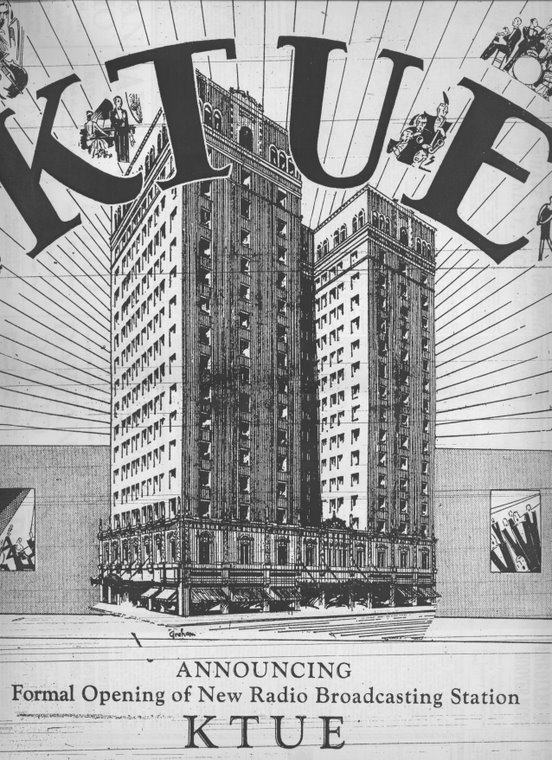
Jesse Jones, Mr. Houston, owned the Chronicle and the Rice Hotel, which in turn owned KTRH. In the early 30s Ross Sterling sold the Houston Post-Dispatch and KPRC to Jackson Josey, described by the Handbook of Texas as a representative of Jesse Jones, who renamed the company the Houston Printing Co. and renamed the newspaper the Post. In 1930, Tilford Jones, nephew to Jesse Jones, had formed Harris County Broadcasting and purchased KTUE and changed the call letters to KXYZ. For more than a dozen years, up until KTHT hit the airwaves just after D-Day in 1944, all the media in Houston except the Houston Press were controlled by Jesse Jones or his business associates or family. It was a fact Roy Hofheinz was to complain bitterly about to the FCC in his struggle to win approval for KTHT, alleging his competitors operated as a monopoly and were trying to deny him a license. The Houston Press, whose editor had worked for the Post and founded the Chronicle, observed at one time the Post was even more fawning in its admiration of Jones' greatness than his own newspaper. The stations seemed to have cooperated closely on promotions.
There were at least 2 applications for new stations during the decade but nothing became of them and it was not until 1946 that any stations other than KTHT got on the air leading an onslaught of new signals on AM and FM, in the city, the suburbs, and the outlying areas. The decade was not without developments, however. Before it was over, 2 programs started on Houston radio had gone to the networks and were enjoying long, successful runs, with one spawning a spin-off and a short-lived TV version in the 1950s. A Houston station would become only the second in the nation to operate 24 hours a day and two others, KTRH and KPRC, would be only the second pair of stations in the nation to operate from the same antenna.
In 1931, the Federal Radio Commission list of June 30 showed KPRC at 920, licensed to the Houston Printing Co., KTRH at 1120, licensed to the Rice Hotel, KFUL, Galveston, licensed to the News Publishing Co. at 1290, KTLC, Houston, licensed to the Houston Broadcasting Co. at 1310, KFLX, Galveston, licensed to George Roy Clough at 1370, and KXYZ, licensed to the Harris Co. Broadcast Co. at 1420. Up in Austin, KUT was still on the air at 1500, licensed to the Driskill Hotel.
Even though they had different owners on paper, KTLC and KPRC were co-operated for some time in the early 30s. G.E. Zimmerman, who had been the first general manager of KPRC in 1925 and whose title was Supervisor of Radio for the Houston Post-Dispatch, served as General Manager of both stations. KTLC operated from the ‘old Post Building.’ T.P. Hills was the Program Director, Ingraham S. Roberts III was the commercial manager. Since the Post-Dispatch building at Polk and Dowling had only been occupied in 1925, the reference to the ‘old’ Post building was a reference to the building on Travis at Texas which had housed the early radiotelephone studio that supplied some of the programming on WEAY. A Houston city directory of those years shows KTLC on the 3rd and 4th floors. KPRC was on the 22nd floor of the Post-Dispatch skyscraper at the corner of Texas and Fannin. The listings of the two stations occurred side-by-side in the Post-Dispatch in a big display box; the listings for KTRH and KXYZ occurred in smaller print, elsewhere on the page. Only KPRC was named as the Post-Dispatch station.
Some of the staff worked on the air on both stations. Bruce Layer, who was later to be Sports Director of the Houston Press, KPRC and the first Sports Director of KPRC-TV, was doing play-by-play of Buffs games on KTLC. Blind pianist ‘wonder boy’ Frank Tilton appeared regularly on KTLC, still doing his all request piano shows. Occasionally the listings indicated Tilton’s program would also be broadcast by WRR in Dallas.
KTLC ceased operations at the end of the broadcast day on August 17, 1932, a Wednesday. The program schedule printed in the Post-Dispatch that day showed the last program of the day to be the KTLC Goodbye Program, but there was no story.
The Chronicle had more information; in its story that day the Chronicle reported that Tilford Jones, nephew of Jesse Jones and manager of KXYZ, had gone to Washington just a few days earlier to arrange the transfer of KTLC to KXYZ and had received FCC approval. KTLC was to be ‘absorbed.’ Sustaining programs, i.e., those with paying sponsors and unexpired contracts, would be aired on KXYZ; some others might also be picked up and KXYZ’s program director Hayne Hall had other plans for new programming. KXYZ was to increase its power from 100 watts to 250 watts in early September; its studios were still listed as being in the Texas State Hotel at 720 Fannin.
Bruce Layer’s play-by-play of the Buffs starting airing on KXYZ within a few days. The Post’s listings put KXYZ in the display box next to KPRC; KTRH’s listings continued to appear in much smaller print elsewhere on the page. The Chronicle gave equal space to the KTRH and KXYZ listings while KPRC listings were smaller.
One of the announcers who lost a gig with the demise of KTLC was a young man blessed with the ‘gift of gab’ as he put it who had been staging his own teen dances at big dance halls like Kensington Hall and End ‘O Main Dance Hall and as far away as Louisiana since he was 15 and had convinced the program director of KTLC to sell him a block of time once a week for an amateur hour program before such programming was a staple of broadcasting. Within 2 years of the demise of KTLC he would be elected to the Texas Legislature and in 4 years he would become the youngest County Judge ever in the history of Harris Co. and go on to serve four terms. Within 12 years he would own his own radio station and and then several others and draw the attention and acclaim of broadcasters across the nation for his station’s coverage of local, national and international news events. Within 14 years almost to the day he would put Texas’ first FM on the air. Over the next 50 years, he would also serve as mayor of Houston and play a central role in building the world’s first ever domed stadium and bringing major league professional baseball to Houston. Roy Mark Hofheinz had passed the bar at age 19; in 1932 when KTLC folded he was just 20 years of age.