Looking Back - a Slide Show
A Houston Chronicle slide show of lost FM formats, including some interesting photos and some historical facts, mostly of rather recent stations and not all of which are true.
A Houston Chronicle slide show of lost FM formats, including some interesting photos and some historical facts, mostly of rather recent stations and not all of which are true.
KNRO-FM, Conroe, signed on in February, 1965, at 106.9 MHz. The exact date of the first broadcast is not known but Broadcasting Yearbook gives the date as February 14. A permit had been issued 2 weeks earlier for remote control operation. In early August of 1968, the station went to 24 hours a day, launching an all-night country music program hosted by a former Nashville musician, Bill Board. The midnight to 6am show was call the Tennessee Bill Board Country Music program according to Station Manager Bob Brown. (Note: I did not make this story up; it was published in Billboard). The station operated with 40,000 watts at that time.
The station was acquired by the Jimmy Swaggert Evangelical Association on March 31, 1978. In the 1979 Broadcasting Yearbook the calls are given as KMCV-FM but it is not known when those calls were adopted. The listing shows the station operating with 98,000 watts from a 530 foot tall antenna. Subsequently, Swaggert was to adopt the calls KJOJ-FM. The station was eventually sold to Regan Henry and US Radio which programmed jazz and shock talk as KKHU. It has also been known as U106.9 and ZRock.
Currently KHPT-FM, the Eagle, a Classic Hits station owned by Cox, operates on 106.9, simulcasting with KGLK-FM, Lake Jackson, on 107.5.
Billboard Magazine reported on December 25, 1965, that KHUL-FM, 95.7 MHz, had switched to a country format. Jack Hayes was Program Director. Eight months later, on August 12, 1966, Industrial Broadcasting acquired the station. Industrial was also the owner and operator of KIKK, 650 kHz which it had acquired on October 1, 1958. The two stations maintained separate facilities and staffs. Charles Temple was General Manager of KHUL and Mike McCann was Program Director; Leroy Gloger was General Manager of Industrial. A Market Profile of Houston published in Billboard Magazine, March 5, 1966, indicated KHUL-FM was already broadcasting 100% country music by that time, well before being taken over by KIKK.
A story in Broadcasting in May, 1967, said Industrial was also managing WENK in Union City, TN, doing business as KIKK, and was also going to manage stations in Paducah, KY.
On November 11, 1966, Industrial applied for permission to change the call letters of KHUL-FM to KIKK-FM. The date of the call letter flip is not known but the station was operating with the new calls by by March, 1967, when Billboard published a Houston market profile. KIKK-FM had 15.5 kilowatts of power from atop a 235 foot antenna at the site of the former KHUL studios at 1700 Holcombe Blvd. Leroy Gloger was listed as President and Art Posner was in charge of Operations. On August 10, 1968, Nortemp Broadcasting acquired KIKK-FM.
The station maintained a Country Music format until November 7, 2002, when it flipped to The Wave, KHJZ-FM, a smooth jazz format. Currently the station is known as Hot 95.7. It is owned by CBS and the calls are KKHH which were adopted on April 1, 2008.
On February 11, 1968, Harbor Broadcasting, licensee of KGBC, Galveston, signed on their new FM station on 106.1 MHz, with the call letters KGBC-FM. Harbor had acquired the AM station on December 20, 1964.
The FM station was sold to Beacon Broadcasting in 1974, moved to 106.5 MHz and re-branded as KUFO-FM. Before the sale to Beacon the calls had been flipped to KESY which frequently appeared in print as K-ESY. Subsequent calls on the station were KXKX and KQQK but the station ceased broadcasting and had it’s license cancelled by the FCC. (See also the comments below).
On August 4, 1968, a license was issued for KFRD-FM, Rosenberg, to operate on 104.9 MHz. The station does not appear to have gotten on the air immediately, however. An FCC notice in late November appears to authorize programming operations and in Billboard Magazine for November 30, General Manager Bill Sloan indicated the station would broadcast daily from 3:30 pm to 11 pm, duplicating the programming of the AM station until 5:30 pm and then airing a program to be known as the Town and Country Time Program. The music would include both pop and country. Subsequent call letters used on the station have included KMIA-FM, KMPQ-FM, KLTO-FM, KOVA-FM, and KPTY-FM. Currently the station is licensed to Missouri City, Texas, and operates as KAMA-FM, Tu Musica. It is owned by Univision.
The Ratings are in! KNUZ was still doing quite well vs. KILT with it's 250 watts; second place ain't bad. Note only two FMs showed up.
Thanks to John B. Hill, an engineer at KILT from 1960-1964, for sharing these. John has shared some other memorabilia from that era and filled in some facts and anecdotes about the McLendon operation, both AM and FM. See the KILT Staff Directory from this era here; there more published on this blog in the near future.
Broadcasting Yearbook gives March 10, 1962, for the launch of KHCB-FM, at 105.7 mc. A religious station since its inception, the calls stood for ‘Keeping Him Close By.’ There was no story in the Chronicle, not even in the Church Chronicle, a weekly special section. Listings first appeared in the paper on March 16. The station operated originally only from 4pm to Midnight daily.
The Post published a feature article on the station in August of 1963. At that time the station was operating from studios at 126 Almeda-Genoa Road and had experienced recurring difficulties meeting its budget each month, but operations had expanded to 24 hours a day. There were only 4 paid employees, only 3 of which were full-time. Between the hours of 7pm and 6am volunteers exclusively manned the station. Funds were being raised to make a down payment on a new 10,000 watt transmitter to replace the 1000 watt unit in use. The article stated the call letters just stood for Houston Christian Broadcasters.
The Yearbook gives August of 1962 for the launch of KLVL-FM , 92.5 mc, in Pasadena, but the station never appeared in either the Chronicle or Post listings any time during the month, nor were there any stories about the station. It first appeared in Chronicle listings on September 7 showing that it was simulcasting the programming of KLVL-AM. By a year later, the programming was listed in the Post as ‘Latin American Popular Music.’
The station was sold in 1969 to Sudbrink and became KFMY-FM with a transmitter atop the Pasadena State Bank and only a few hunded watts of power. Due to complaints by KFMK, the calls were changed to KYED-FM, pronounced 'keyed;' they played oldies and big band music. Then the station was sold again and became KYND, “Kind 92,” boosted power to 100, 000 watts allowing coverage of the entire Houston area and carried the beautiful music syndicated format of Stereo Radio Productions, or SRP, from Jim Schulke and Phil Stout. This format was popularly known as the Schulke format, although Jim Schulke was the sales part of the team and Phil Stout did the programming. KYND became a ratings leader in Houston for a dozen years, forcing KXYZ-AM to drop beautiful music programming, before being defeated in the ratings wars itself by KODA-FM in late 1981. It flipped to 93Q, KKBQ-FM in late 1982 with John Lander and the Q Morning Zoo and played Contemporary Hit Music. It had moved to 92.9 MHz in late 1982, prior to the format flip. Those call letters are still used, although the station flipped to Country music in the fall of 1991.
Broadcasting Yearbook for 1979 showed my home town of Lake Jackson got am FM station in April, 1963 but like many dates in the Yearbook that was false. An application was filed in April, 1962, by a company called Texas Audio Electronics for an FM station in Lake Jackson to operate on 92.3 megacycles with 3.65 kilowatts from a 192' tower. Texas Audio Electronics was composed of Jim Hairgrove and his other investors in the partnership that owned KBRZ, Freeport. There must have been a modified application filed along the way which was missed by Broadcasting or the OCR software because TAE was granted a construction permit for an FM to operate on 107.3 mc, channel 297, with 28 kilowatts from a 180' antenna on January 20, 1964. The estimated cost to build the new station was $21,874, the anticipated operating cost for the first year was $34,000 and revenues of $25,000 were projected. The call letters KLJT-FM were assigned February 10, 1964. When the FM station was sold in February, 1969, Broadcasting magazine stated it had been put on the air in May, 1964. The earliest mention of the station I can find in the available issues of the Brazosport Facts online appeared on Friday, May 29, 1964. In a story about the dedication of a new youth baseball field it was mentioned the facility was located behind the radio station. I have found no more definite date for the actual start of broadcasting and Broadcasting did not report the granting of a license for the station until September 2, 1964. KLJT-FM's original studios were just 3 long blocks from my home, on Willow Drive at the old Angleton-Clute Road, in a building that now houses the Brazosport Board of Realtors. It was a small building with the transmitter and antenna right outside the back door. An SCA permit was granted to Texas Audio Electronics in August, 1965, and a background music service called Musiplex was launched.
Hairgrove died in April, 1967, while serving his first term as a State Representative from Brazosport in Austin. In February of 1969, his widow sold both KLJT-FM, Lake Jackson, and KBRZ, Freeport, to Wayne Marcy and George A. Mayoral, doing business as Summit Broadcasting. Marcy was a sales representative for radio equipment in Houston and Mayoral, of New Orleans, had radio and TV properties in Louisiana and Puerto Rico. The sale took effect on Saturday, July 19, 1969.
In November, 1973, Broadcasting reported the station had applied for a call letter change to KGOL-FM.
On November 7, 1979, Broadcasting reported KGOL-FM was sold for $784,000. The sellers were Coastal Broadcasting, consisting of Jim Payne and Lewis Wilburn. The buyer was John Brown Broadcasting, owned by John Brown University of Siloam Springs, Arkansas. There had apparently been another change of ownership in the 1970s. On the same day the sale was approved, the FCC approved a Construction Permit for a new transmitter location and facility to be two miles northwest of Texas 35, four miles northwest of Danbury, TX, with 100,000 watts ERP horizontally and vertically and a new 940' antenna. The station at that time was operating from a 180' antenna with 28 KW.
Payne, one of the sellers, had applied for a permit for an FM station in Yoakum, TX, on 102.3 mc with 3 KW of power in March of that year.
Station officials for KGOL told the Chronicle the format was Christian Beautiful Music, playing such artists as B.J. Thomas. The frequency subsequently was changed to to 107.5. The station has also been known as KZFX, (1986), Z107, and KRQT. It became KTBZ in early 1995 and then switched frequencies with co-owned 94.5 KLDE and became KLDE-FM, Oldies 107.5. Call were flipped again on December 14, 2006, to KHTC-FM. As of June 1, 2009, the station became known as 107.5 The Eagle with the calls officially KGLK-FM.

This article was edited 10/1/10 to include some new information about the programming of KXYZ-AM/FM in the 1960s.
The decade of the 1960s would prove to be a very active one on the FM dial in Houston with many new stations signing on, but it was not until the end of the decade that FM began to make an impact in the ratings. A year and a half after KHGM-FM moved off the 102.9 frequency to 99.1, Veterans Broadcasting launched an FM in its place. KQUE-FM signed on at 6am, Tuesday, October 1, 1960, to broadcast 18 hours a day, 7 days a week. Webb Hunt was the first Program Director. Teaser ads in the papers ran heavily; ‘Cue – for the best in FM Radio. K-Que. Coming.’
An early program schedule in the newspaper listings had Webb Hunt, 6a-10a, KQ Music Hall, 10a-12N, Felix Martin, 12-2pm, Bob Brock, 2p-4p, Joe Walker, 4p-6p, Felix Martin, 6p-9p, and Bob Brock, 9p-12M.
The second new FM of the decade came on the air just 2 weeks later. KARO-FM took to the airwaves the weekend of the 15th and 16th of October with 8000 watts on 94.5 Megacycles. The studios were on the 11th floor of the American Investors Building at 600 Fannin and the transmitter was atop the building. Robert L. Weeks was the Station Manager and Bert Wiel Assistant Manager. The schedule printed in the papers showed the station was only on the air from noon to midnight originally but by years’ end the broadcast day had been extended to start at 9am. It’s been alleged the call letters were taken from Karo syrup because the programming was sweet, sappy music. The 1962 Houston telephone directory gave Mr. Weeks’ address as San Diego, CA.
KARO lasted just over 4 years before becoming KLEF-FM, a full-time classical music station. However, it’s not clear that KARO was on the air continuously during the 4 years; there were many times when program listings for the station were missing in the papers.
By mid-1961, Gordon McLendon’s FM took to the air waves. KOST-FM first appeared in the radio listings in the Chronicle the weekend of July 15-16; there was no story. The station operated at 100.3 megacycles and simulcast KILT-AM. Broadcasting Yearbook confirms the year 1961 but whether this station had previously been known as KZAP-FM as early as 1959 is not known. Other call letters that have been used on this frequency include KILT-FM and KXAS-FM, ‘Texas 100.’ It has been a country station since the Spring of 1981. (Spring 81 ARB was KILT-FMs first as country).
The Broadcasting Yearbook for 1979 gives 1960 for the first year of KXYZ-FM but it was not until the last quarter of 1961 that the station returned to the air after a hiatus of eight years. In a story about Gerald Chinski’s resignation as Chief Engineer on October 1, Chronicle Radio-TV Editor Howard Stentz noted Chinski would be leaving after 26 years with the station as soon as the FM station was on the air in a few days. KXYZ-FM first appeared in the Chronicle listings on Wednesday, October 4, simulcasting the AM 24 hours a day.
The stations had just changed hands that summer. The sale of the combo from N.A.F.I. Corporation of Los Angeles to Public Radio Corporation of Houston for $1,000,000 was finalized in early June. Public Radio Corporation was Lester and Max Kamin of Houston and Morris Kamin of Victoria; they also had stations in Tulsa and Kansas City. Lester Kamin had been a DJ in Houston in the 1940s and had owned an advertising and public relations firm locally. Sam Bennett, former GM of KTHT came on board as new GM and Milt Willis, former PD of KTHT became the new programming head.
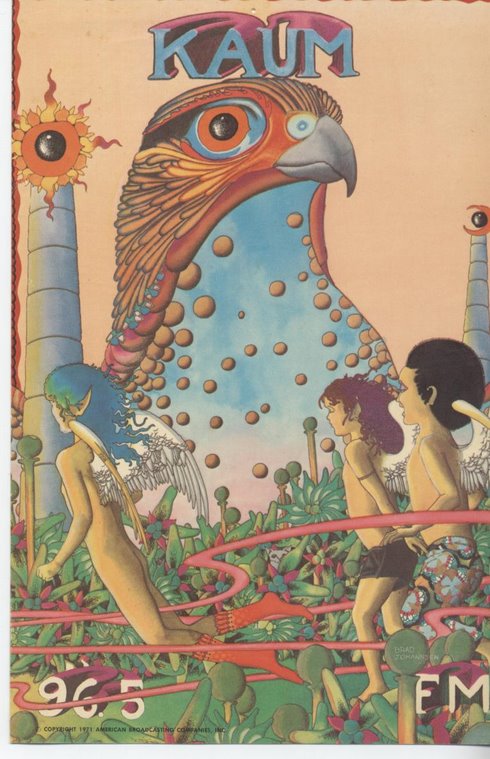
KXYZ-AM and and FM was locally owned and simulcast a heavily proudced beautiful music format until mid-decade when a heavy personality format was installed. In 1968 the stations were purchased by the American Broadcasting Company which returned a produced, matched-flow beautiful music format on the air under the direction of Paul Mitchell. This did well in the ratings until the first matched-flow beautiful music FM came on the air, KYND, the one-time KLVL-FM on 92.9, began to eat away at the numbers. By the spring of 1970, KXYZ-FM was broadcasting the ABC Love format which consisted of syndicated tapes of album-oriented rock programming. KXYZ-FM flipped call letters to KAUM and went live and local with the album rock format the first week of September, 1970. KAUM dropped the album rock format after just a few years and went through several format changes before changing call letters to KSRR in mid-1980. (KAUM last noted in Apr/May 1980 ARB; KSRR shown in Oct/Nov 1980 ARB). The station changed call letters again in the 80s to KKHT and then to KNRJ. (I first have KNRJ in 1989 RnR Ratings Report, Vol II) and by the Spring of 1991 had adopted KHMX-FM. (Spring 1991 ARB). More will be posted on this site on the history of KAUM.
The image above comes from the Houston Press in 1961.
It was not until 1958 that there were any further changes on the FM dial in Houston. A list from ‘North American Radio and TV Station Listings’ by Vane A. Jones for that year has four FMs again listed for Houston: KFMK, 97.9; KPRC-FM, 102.9; KTRH-FM, 101.1, and KUHF, 91.3 KFMK-FM was the first commercial FM on the air in Houston without a sister AM. The station was apparently ready to go on the air in mid-January, 1958 but had to await regulatory approval and finally got on the air Sunday, February 2nd at 5pm. The station operated with 10,000 watts from the Medical Towers Building at 1709 Dryden. The newspaper listings showed the frequency just as 98 mc but later as 97.9; the format was popular music. Bob Gardner, who had previously worked at KLBS before it was taken over by McLendon and in Beaumont radio and at KTRK-TV, was the General Manager.
Interest in FM broadcasting was beginning to pick up around the country and before the year was over there were more developments on the FM dial in Houston. In November of 1958, Paul Taft purchased KPRC-FM and changed the call letters to KHGM-FM which stood for ‘Home of Good Music’ or ‘Houston’s Good Music.’ The call letter switch took place at 1pm on Sunday, the 9th of November. Taft had resigned as General Manager of KGUL-TV, channel 11, earlier in the year and formed Taft Broadcasting.
Just before the switchover, KPRC-FM had been operating only from 6pm to 11pm daily and the new ownership meant an expansion of broadcast hours. KTRH-FM was on from 1pm to 12 Mid, KFMK-FM from 8am 12 Mid and KUHF-FM from 7am to 9:30pm.
On April 26th of the following year, KHGM-FM moved to 99.1 mc, signing on at 12 Noon after being off the air for 24 hours to complete the changeover of equipment. The station boasted 49,000 watts and claimed to be the most powerful FM in Houston. This apparently coincided with a move to a new facility at 4810 San Felipe on the city’s far west side. Ads highlighted the station was to be a showcase of ‘tasteful music,’ 17 hours a day with the library having been selected as a result of a survey of 2000 homes. The regular broadcast day was to start at 7am.
On July 1, 1961, the call letters of KHGM-FM were changed to KODA-FM to match an AM sister station. KODA-FM is still on the air today on 99.1 MHz and as the heir to KPRC-FM is believed to be the oldest FM in Houston and either the first or second oldest FM in Texas, depending on whether KPRC-FM was on the air continuously in the 1950s. KODA-FM was later to claim to be only the second station in the nation to broadcast full-time in stereo. Meanwhile the KHGM-FM call letters were later used on a station on 95.1 mc in the Beaumont-Port Arthur-Orange area.
Taft Broadcasting was also to operate the Muzak franchise for Houston in addition to an AM station, KODA-AM, and was also involved with the first sound system at the Astrodome and as a contractor for NASA. Taft Broadcasting LLC is still in business, run by Paul Taft’s son, Philip, although they have not owned any broadcast properties in Houston since 1978.
At least two more and possibly three new FMs started broadcasting before the end of the decade. A story in the Chronicle in eary September said KHUL-FM would be on the air on September 22 but it was not until 7am on October 4, 1959, that the station started broadcasting on 95.7 mc. The call letters of this station were pronounced ‘cool’ and initially it operated 24 hours a day. Studios were located on the 15th floor of the Park Towers, a high rise apartment building at 1700 Holcombe Blvd. at Braeswood which is no longer standing. T. A. Robinson, Jr., President and owner, said the station would program ‘tasteful arrangements’ of music by George Gershwin, Cole Porter, Rogers and Hart, Oscar Hammerstein, Vernon Duke, James Van Heusen, Lerner and Lowe and Duke Ellington.
KHUL has been remembered fondly as a jazz station by many but that can not be confirmed from the newspaper accounts and early listings; it may have evolved into a jazz station later. An ad in 1963 touted ‘All Night Jazz’ and ‘Swinging Standards all day and evening.” An ad for the station in 1964 mentioned ‘Jazz after Midnight’ in addition to other special programs and did not claim it was a full time Jazz station.
A typical program schedule in the papers in late 1959 showed KHUL Start at 6am, KHUL, Calm and Collected at 12:05pm, KHUL and Refreshing at 3:05pm, KHUL of the Evening at 6pm and KHUL All Night at 12M with news 4 times a day. Those program titles could refer to easy listening programming.
The twenty-four hour a day broadcast schedule did not last at KHUL-FM. An ad for the station in early 1962 said KHUL ‘Stays up til 2am, Friday Saturday and Sunday, Midnight Monday thru Thursday’ and could be found ‘Just Under 96 on Your Dial,’ for ‘Good Music and News.’
The station changed hands and call letters in the mid to late 60s becoming KIKK-FM and operating as a country station for more than three decades before becoming a smooth jazz station, KHJZ-FM, The Wave, in 2001. It is now Hot Hits 95-7 (KKHH).
On the same day the paper announced KHUL’s impending launch it also noted KUHF-FM was installing the first stereo control room in the city and KHGM-FM had published a program guide.
At 6pm on November 8, 1959, KRBE-FM came on the air at 104.1mc. This was originally a full-time classical music station with studios in the 1400 Hermann Drive high rise apartment building across from the Rose Garden in Hermann Park. Some have asserted the calls were because the station was located on Kirby drive just north of US 59 but the station did not move there for almost a decade. Ads appearing in the papers the day the station launched indicated the call letters stood for ‘The Key to Radio Broadcasting Excellence” but it has also been noted the calls happened to be the initials of the owner’s business, Roland Baker Enterprises.
Ellis W. Gilbert was the President and General Manager and also had an air shift. Gilbert had just recently resigned as manager of KTRH-FM, which also scheduled a lot of classical music, and according to a story, had been known as ‘Mr. FM’ in the early 50s when he hosted ‘House of Music’ on the ‘now defunct’ KYXZ-FM. Other air personalities included Roy Landers, Eamon Grant and Eddie Bates. The station has had the same calls throughout its history.
According to the history of Dallas radio station KLIF Gordon McLendon owned an FM in Houston in 1959 with the call letters KZAP-FM but exactly how those calls figure into Houston radio history is not clear. Gordon McLendon was one of the first to recognize the value of ‘parking’ call letters that he wanted to use and that may be what happened in this case. When McLendon bought a San Francisco AM and flipped it to KABL, the previous call letters KROW were assigned to his proposed FM in Houston. Later, McLendon switched the KROW calls with his proposed calls for an FM in Dallas, KOST-FM, and that is the call the Houston FM signed on with. Just how KZAP figures into to this is not clear. The first mention of KOST-FM, 100.3 mc, is not found in radio listings until mid-1961 and when it actually first got on the air is not known. I have found only one listing in the Houston papers for a KZAP-FM, much later in the 1960s.
At the beginning of the decade of the 1950s there were four FMs on the air in Houston. The first year would see KOPY cease operations in the Spring and KUHF-FM launch before the end of the year. A list published in the Broadcasting Yearbook for 1950 shows KXYZ-FM, 96.5 mc with 15,000 watts, KTRH-FM, 101.1 mc with 33,000 watts, KPRC-FM, 102.9 mc with 57,000 watts, and KUHF-FM, at 91.3 mc, which had a Construction Permit for 9600 watts.
Both KUHT and KUHF have station histories on their websites and the story of KUHT as the first educational TV station in the nation is well known. According to the KUHF web site, that station signed on November 6, 1950, making it at least the 4th oldest FM station still on the air in Houston and the oldest one with the original call letters. There have been several hiatuses in KUHF’s history and some may have lasted as long as several months but at the present time there is no evidence the license ever lapsed.
The Chronicle took note of the launch of KUHF-FM on Sunday, November 5th, noting the station would go on the air at 91.3 megacycles for six hours a day on the 6th with the formal dedication services set for December 1. The facilities were in the tower of the new Ezekiel W. Cullen building which had just been dedicated the week before; 5 stations had provided live coverage of that dedication, a big day in the history of the University. The new station’s facilities included two studios that could hold more than 100 people each. Dr. Wilton Cook, Chairman of the Fine Arts Department, was in charge of the station. He said the plans were to use as few transcribed programs as possible, to allow radio majors at the University to get as much experience as possible and expose as much on campus talent as possible. A leased line to KTRH would make it possible for that station to air simulcasts and re-broadcasts of some KUHF programs to reach a wider audience that didn’t have an FM receiver.
I understand the staff of KUHF-FM has been researching the station’s history for the upcoming 60th anniversary in 2010; I’m hoping they will come up with an audio retrospective. The station website includes a brief chronology of important milestones in the station’s history.
Besides the 4 Houston FMs, White’s Radio Log for Winter, 1951, a national monthly publication, listed KREL-FM, Goose Creek (Baytown) at 92.1 and KLUF-FM, Galveston, at 98.7. Neither of these were to last.
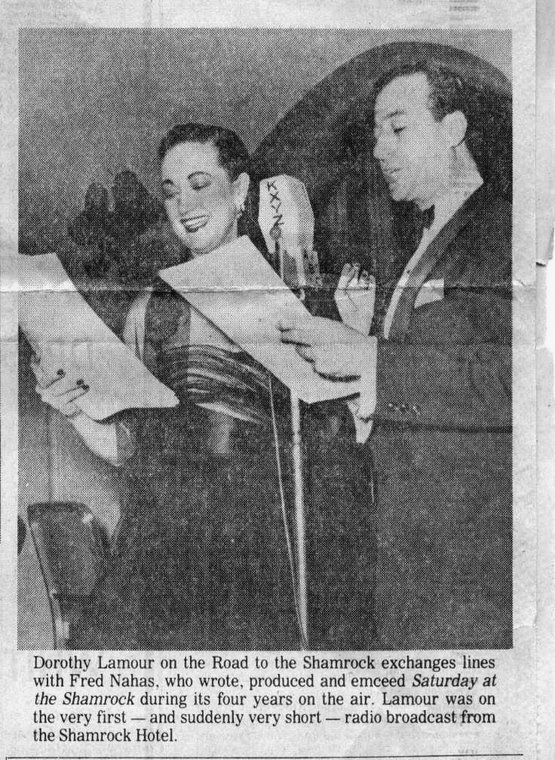
For the next several years the FMs that were on the air in Houston struggled with the same problems facing FM operators across the country: few listeners and poor advertising revenues. As far as is known there were no new stations either applied for or on the air in Houston until late in the decade and as of September 10, 1953, the number of stations dwindled to just three as KXYZ-FM ceased operations. The station was to remain silent until late 1961 when it returned to the air with the same calls and frequency. Fred Nahas was President of the radio station when it ceased broadcasting; it had been programming Classical and semi-classical music. Nahas said all the staff would be devoted to putting KXYZ-TV on the air, a UHF station that they hoped to launch on Channel 29 in 1954 but never did.
...of a Houston radio listener. From the Houston Post, Wednesday, February 18, 1948, the first day of broadcast of KNUZ, 1230.

Chris Huff of the DFW Radio Archives has continued his work on compiling a catalog of early Texas FM stations from Broadcasting Magazine, White's Radio Logs and the Texas Almanac and other sources.
According to his findings, KLUF-FM Galveston was in operation from the Winter of 1949 to the Winter of 1954, operating with 8 kw on 98.7 mc.
Now that I have some better dates I may be able to find something about it in the Galveston newspaper archives.
Less than a week after KTRH-FM took to the air, the Lee Segall Broadcasting Co., by that time owned by the William Smith Construction Co., received a permit for an FM in Houston. According to information supplied by Chris Huff of the DFW Radio Archives, the proposed call letters of the Houston station would have been KCOH-FM but the permit was never activated. It’s not known at this time if this permit was just a reassignment of the earlier permit issued to Segall or what calls he had requested. William B. Smith was President of Call of Houston, Inc., which put KCOH-AM on the air in May, 1948.
Later in the same week the permit was announced, The Post published congratulations to Segall on his new FM in Dallas, KIXL-FM.
On November 13, 1947, the University of Houston was granted a permit for an FM station to be known as KUHF-FM with a 3 kilowatt transmitter and 267 foot antenna. Permanent studios for the station were included in the plans for the Ezekiel W. Cullen building but temporary studios were to be in the recreation building on campus and the transmitter in the Engineering Lab building. Students in the Speech Arts Department were already producing programs that aired on KATL. The University had 6 months under FCC regulations to set a launch date but the station was not to get on the air until late 1950.
Later that same month, W. Albert Lee received an FM permit for KLEE-FM, a conditional grant subject to engineering approval. Lee announced construction would begin immediately and the Chronicle reported the station would be on the air in 90 days but the permit apparently was never activated. Lee and his engineers had their plates full, trying to get his AM on the air and planning for the possibility of being granted Houston’s first TV license, plus on-going renovations in both his Milby and San Jacinto Hotels.
Amidst all the hoopla over the launch of Lee’s KLEE-AM on January 31st, 1948,  Houston’s fourth FM station, KXYZ-FM, slipped on the air the next day, a Sunday, at 9am. The schedule was to be 9am to 5pm Sundays and 7am to 3pm weekdays according to an ad. The station operated at 96.5 megacycles, FM channnel 243. Two days later, however, a story in the Chronicle reported the station was simulcasting KXYZ-AM from 6:45am to 11pm.
KXYZ-FM was to last 5 and a half years before shutting down for just a little over 8 years.
Tne next FM to make it on the air in the area was the first in the market outside of Houston. KREL-FM, 92.1 megacycles, signed on Easter Sunday, April 17, 1949, at 6:30am. The inaugural broadcast was a simulcast with KREL-AM, 1360 kc, of the sunrise services from Memorial Stadium in Baytown. The permit had been granted to Tri-Cities Broadcasting on April 4, 1947 and the 230' antenna had been put in place in 1947 on one of the towers erected for KREL-AM on Decker Drive. The range of the station was estimated to be 50 miles and it was on the air daily from 3pm to 11pm. The format included popular music plus some of the more popular serious music selections. Ads for the station in the Daily Sun said that FM stood for ‘Far More Listening Pleasure.’ Within a couple of years the broadcast day was expanded from 1pm to 12 Midnight, then further expanded to simulcast all day the programming of KREL-AM. This continued for 4 and a half years. The last day of KREL-FM apparently was November 30, 1953; up until that time, daily listings in the Baytown Sun continued to show the AM and FM simulcasting. But on December 1, the listings for KREL-AM appeared in an ad touting new management, new programming policies, and new personalities. I never found a story explaining what had happened but apparently there had been a change of ownership and the FM was shut down. Listings for the FM stopped appearing. (Note: information supplied by Chris Huff from another researcher indicates KREL-FM was not deleted from the FCC file until 1958).
The reports in the Houston papers of FCC actions concerning Houston radio stations seem to have been published on a space-available basis. Sometimes they were very brief, sometimes quite extensive including news of goings on in other cities such as Dallas, San Antonio and Austin. In addition to all of the above, Chris Huff has shared a record, found by another researcher in either the FCC database or Broadcasting Magazine, of yet another FM authorized for Houston, KHCO-FM, to operate on 106.1 megacycles, sometime in 1948-49, licensed to Earl C. Hankamer This permit was never activated and I have come across nothing about it in my research.
There was also an early FM in Galveston, KLUF-FM, which appeared in some White's logs. In a story January 8, 1949, in the Galveston Daily News, owner George Roy Clough said the station should be on the air in 30 days. A new tower was being built in the 6100 block of Broadway, north of the existing KLUF tower, with a height of 222'. Both AM and FM would operate from the tower with the FM operating with 9600 watts which Clough said should give a range of 40-60 miles. The earliest schedule I have found in the paper was on November 11, 1949, while the latest was December 20, 1950. Both KLUF and KLUF-FM were sponsors of an ad in the August 19, 1949, issue of the paper congratulating the local head of Interstate Theaters on his 20 years of tenure. All of the schedules I examined except 2 showed a simulcast of KLUF-AM from early or mid-afternoon until 10 or 11 pm. One schedule showed a baseball game from LBS, an afternoon game, followed by a scoreboard program and then a simulcast with AM; the other appeared to show independent programming for about 5 hours one afternoon before picking up the AM. Those two were certainly the exceptions of all the printed schedules I came across.
According to the listings in White's, the station operrated from the Winter of 1949 to the Winter of 1954 on 98.7 mc with 8 kw.
Edited 2/11/2014 to add more details about KLUF-FM.
The Houston Post reported on October 1, 1946, that Harris County Broadcasters, owners of KXYZ, had been granted a conditional construction permit for a Class B FM station on the previous day, subject to final FCC approval of engineering conditions. On December 2nd, the same day KTHT-FM changed call letters and increased program hours and power, the Chronicle reported the FCC had issued a Construction Permit for KXYZ-FM. apparently the final permit. The story said the station would probably be on ‘early next year’ on the frequency of 96.3 mc but that was perhaps a typo; the station was to operate on 96.5 and didn’t get on the air for fourteen months.
On November 28, the Chronicle reported that Tri-Cities Broadcasting had applied for an FM for the Tri-Cities area; this was the group headed by Goose Creek Sun publisher Robert Matherne. It was also reported the FCC had as yet taken no action on the group’s application for an AM. It was to take two and a half years for this FM to get on the air.
Houston’s second FM, KPRC-FM, began broadcasting on December 24, 1946, Christmas Eve, at 3pm, with a formal dedication ceremony at 5:45. That ceremony echoed in several ways the launch of KPRC-AM 21 and a half years earlier. Alfred P. Daniel was again the first announcer on the air and master of ceremonies of the dedication. Governor William P. Hobby, who had been President of the Post-Dispatch in 1925 and was now owner of the newspaper, was also on hand, as was Houston mayor-elect Oscar F. Holcombe, who had been mayor in 1925 and had retired from public office but had come out of retirement and won another term as mayor that fall.
The plan was for all programming on KPRC-FM to be live, no transcriptions were to be used. However, repeat broadcasts of programs were to be a regular feature. The first evening’s broadcast included a performance of Charles Dicken’s ‘A Christmas Carol’ at 7pm which was to be aired again on Christmas Day. It is not clear if they were going to allow themselves to transcribe a performance like that for later re-broadcast or if it was to be performed live two times.
Originally the station operated at 99.7 megacycles, FM Channel 259, but it moved to 102.9 megacycles the last weekend of October, 1947. The permit was for 195,000 watts. Studios were located in the Lamar Hotel at Main and Walker where KPRC-AM had been situated since the early 1930s. The transmitter was on the City National Bank Building at 921 Main, on the northeast corner of Main and McKinney. Studios may have later been located on the 23rd floor of that building.
The Post started printing a daily schedule for KPRC-FM programming in a couple of days and on January 9, 1947, also started printing a daily schedule of KOPY-FM programming.
In the late 1940s and 1950, radio listings indicted KPRC-FM was the only Houston FM not simply simulcasting it’s AM sister station.
KPRC-FM was sold in 1958 and the call letters changed to KHGM-FM and then in 1959 it was moved to 99.1 mc and in 1961 the call letters changed to KODA-FM.
A list of FM stations on the air as of January 20, 1947, from Broadcasting-Telecasting magazine showed the following in Texas, all of which must have signed on in late 1946 or very early 1947:
KERA A. H. Belo Corp. (WFAA), Dallas 94.3
KOPY Texas Star B/c Co. (KTHT), Houston 98.5
KPRC-FM Houston Printing Corp. (KPRC), Houston 99.7
KISS Walmac Co. (KMAC), San Antonio 100.1
KYFM Express Pub. Co., San Antonio 101.5
WOAI-FM Southland Industries (WOAI), San Antonio 102.3
KCMC-FM KCMC Inc. (KCMC), Texarkana 92.5
KTRN Times Pub. Co. of Wichita Falls, Wichita Falls 97.7
The Wichita Falls station had received a CP as of June, 1946, but that sort of information for the others is not available on line.
In the 1940 Census, Houston had ranked as the 21st largest city in the nation. By 1946, it was estimated to have risen to #17 and by the 1950 Census it would be the 14th largest. At the start of 1947 there were just six radio stations on the air here, 4 AM and 2 FM. Over the next 2 years, however, 4 more AMs, 2 more FMs and the first TV station would come on the air, plus a host of stations in surburban towns and cities.
The month of August, 1946, was a momentous time in Houston; the papers reported on major developments on the local scene frequently. Early in the month, General Foods announced it was buying the old Ford assembly plant on Navigation for its Maxwell House Coffee division. Ford had abandoned the plant before World War II and it had been used as a factory for the assembly of airplane parts during the war, then as a warehouse by Pepsi. Maxwell House had been based in Houston since 1907. (Incidentally, the facility still produces coffee but General Foods sold it just last year). About the same time, ads announced the establishment of a new Phillips 66 distributorship for Houston and South Texas. W.S. ‘Bud’ Adams had arrived in town from Oklahoma to head the Ada Petroleum Company.
The travel editors of the papers were gadding about the southern hemisphere, reporting on the wonders to be found by Houston travelers there. Houston International Airport, now known as Hobby, had been certified as an International Air Gateway earlier in the year and Pan Am was offering flights to Havana, Caracas and Santiago; Braniff and Chicago and Southern Airways were also planning direct flights.
Houstonian Howard Hughes, bedridden, recuperating from near-fatal injuries suffered in the crash of a plane he was test piloting, announced from his hospital bed he had invented a fully adjustable bed consisting of 16 separate platforms, each independently adjustable, and had his engineers build it for him to alleviate his misery.
On the broadcasting front The Settegast-Kopf Singers had passed the 500 mark of consecutive live, weekly concerts on KPRC, on their way to setting an all time record for such performances in Houston. Meanwhile the directors of the funeral home proudly announced they had taken delivery on the first new Cadillac hearses to be received since before the war.
Also on the broadcasting front Mrs. John Wesley Graham, who had appeared on the first Houston Post concert on WEV in May, 1922, was still going strong on the radio, presenting her 15th Annual Talent competition; she had a weekly program on KTRH.
And on August 22 Roy Hofheinz announced he had put the first FM station in Houston (and Texas) on the air.
Hofheinz had been too young to play a role in the launch of AM broadcasting in Houston but his biographer Edgar Ray says that that he was determined to make a mark in the industry and be the first to get an FM station on the air in Texas, even though he knew he had to make a dash from behind to do so. By the time he received a Construction Permit, subject to Engineering Conditions, there were already 6 other applicants with Construction Permits statewide including 2 in Houston. In addition, FM had been used by the military during the war and there was virtually no equipment available and copper wire was extremely difficult to obtain. But Hofheinz knew broadcasting equipment and knew what he needed, plus he was a wheeler-dealer. As he had with KTHT-AM earlier in the decade but with much greater urgency, he set to work to get his FM on the air, running up an $800 long distance bill in just 2 weeks, calling all over the country trying to locate equipment. His initial grant of a Construction Permit subject to engineering approval was issued by the FCC on August 2, 1946, the same day a Construction Permit was issued for KTRH-FM on 99.3 mc. The Chronicle bragged that KTRH-FM would be on the air in 6 weeks and be the first Houston FM but it would be 11 months before the station launched.
But as a result of his concerted efforts in just two weeks, on August 15, Hofheinz wired the FCC asking for permission to begin test broadcasts. By the afternoon of August 16th an antenna was on its way from New York on a Slick Air Lines cargo plane and a transmitter was on its way from New Orleans by truck and on the evening of August 17th, test broadcasts began from the KTHT studios in the Southern Standard Building at 711 Main. Then on August 22, just 3 weeks after the CP was issued, the Press and the Chronicle carried the announcement that KTHT-FM would begin regular broadcasts that afternoon on 98.5 megacycles, FM Channel 253, and would operate daily between 3 and 9pm.
KTHT-FM went on the air with only 250 watts but the Chronicle reported that would be upped to 1000 watts within a couple of weeks, boosted to 2000 watts by a double gain antenna. The license was for 250,000 watts and a new antenna was to be erected at 215 N. Ennis on the near east side.
There were only five radio stations in Houston at the time and Roy Hofheinz owned two of them but between the two he put out only 500 watts.
Initially all programming was transcribed but there were plans to originate live programming on the FM; none of the programming duplicated KTHT-AM.
Hofheinz told the papers not only was KTHT-FM the first FM in Houston and Texas but was also the first FM anywhere to be sustaining. Programming was sold in one hour blocks with sponsors receiving one 60 second commercial per quarter hour. Business Manager Ted Hills said 5 sponsors had already signed on, a department store, a bank, 2 radio distributors and a public utility. There were estimated to be only 1500 FM receivers in Houston capable of receiving transmissions in the 88-108 mc band, perhaps another 2500 capable of receiving the earlier 42-50 mc band, but inexpensive converters for the older sets were said to coming to market soon.
For his achievement in getting a sustaining FM station on the air, Hofheinz was elected first President of the Frequency Modulation Association of America in 1947 and held the post for 2 years according to his biographer. I have not been able to find out anything about this organization.
The upgrades that were promised took longer than anticipated and it was not until December 2nd that a half page ad in the Press announced the extension of programming from 1pm to 10pm daily, all of it sustaining, with a boost to 1000 watts. The call letters also were flipped on that day to KOPY-FM. The ad touted KOPY as Houston’s newest radio station and Texas’ First FM and acknowledged that there were few sets so offered demonstrations at all the advertisers who had agreed to set up receivers in public areas so listeners could stop in and experience the new technology. The list of advertisers included Foley’s, City National Bank, Zenith Radio, Houston Transit Co., Stromberg-Carlson Radio, Black Brothers Furniture, Automatic Sales Co., and Houston Radio Supply Co.
Neither the Post or Chronicle took notice of the announcement of the upgrade and call letter change and none of the three dailies was printing daily program schedules for the FM station as they were for the 4 existing AM stations. By the time the Chronicle started printing FM program schedules, on June 30, 1947, when KTRH-FM signed on, listings indicated KOPY had cut back to 6 hours a day of air time.
According to White's Radio Logs, the station moved to 97.9 mc in the fall of 1949, presumably to accomodate a new FM in Galveston which had been allotted 98.7. The 98.5 frequency was later allocated to Port Arthur.
Hofheinz had always vowed that his radio stations would be profitable or he would shut them down and he pulled the plug on KOPY in the spring of 1950 due to declining ad revenues. Radio listings indicated that it was only simulcasting KTHT-AM programming at that time.
Nationwide, early FM broadcasters faced a long road to viability. According to Walter B. Emery’s Broadcasting and Government many were compelled to leave the air for lack of audience or advertising revenue. In 1949, there were more than 700 FM stations in operation, but by 1956 that had dwindled to 530 and many were simply duplicating AM programming. In 1949 more than 200 authorizations for FM stations were voluntarily returned to the FCC. In 1950, the year KOPY went silent, there were 35 new FM licenses granted by the FCC and 169 deletions. There were at least 2 other FM stations in the Houston area that made it on the air in the late 40s but did not last, KREL-FM, Baytown, and KLUF-FM, Galveston, and there was KXYZ-FM which operated for just over 5 years then went silent for 8 years before returning to the air. There were also other permits issued for FMs in the Houston area which never got on the air at all.
The original call letters of Houston’s first FM are now in use on Country Legends, 97.1, which is licensed to Cleveland, TX, and has a transmitter near Shepherd. The KOPY-FM calls are in use on a station in Alice, TX; the station now operating on 98.5 mHz, KTJM -FM, serves the Houston market from a transmitter near Devers and is licensed to Port Arthur and is not related in any way to the earlier FM. The original transmitter site on N. Ennis is still in use; it was the longtime site of the tower for KQUE-FM and KLTN-FM, 102.9 MHz, still operates from that facility while KHMX-FM uses the site as a back-up.
The owners of the Houston Post and KPRC were apparently miffed that Hofheinz had beat them on the air with his station. Three days after KTHT-FM signed on, on Sunday, August 25, 1946, a big article appeared in the Post about a new FM station for Houston - KPRC-FM - which the article said would be on the air by the end of the year. The article bragged about the pioneering role of KPRC-AM in Houston radio and the superiority of FM for symphonic broadcasts but no mention was made of an earlier station in the lower FM band in the early 40s that had been licensed to the Post. No where in the article was the claim made that KPRC-FM would be Houston’s first FM but nowhere in the article were readers informed that they could already tune in to an FM station in Houston. The Post apparently never acknowledged the existence of the other station until January 9, 1947, more than 3 weeks after KPRC-FM had signed on, when the paper started printing the daily program schedule of by then KOPY-FM alongside the schedule for KPRC-FM.
The Chronicle had carried the news of the launch of KTHT-FM on August 22 but apparently did not report on the call letter flip on December 2nd, and did not start printing FM program schedules until June 30, 1947, when KTRH-FM signed on.
The Houston Press, although it carried news about and ads for KTHT-FM/KOPY-FM and other FMs throughout it’s history, apparently never printed program schedules for FM stations.
Biographer Edgar Ray mentions KTHT-FM only a couple of times in passing and is careless with particulars. He says the license was issued early in 1946 and the call letter change took place on August 21. I had to skim every page of the Houston Press from January 1, 1946, thru August 22 to find the correct information, then continue skimming until December 2nd to get the correct date for the call letter flip. As a result, I know far more about what happened in Houston in 1946 than I ever imagined I’d know.
Perhaps the earliest mention of an FM in Houston came in a brief story on page 1 of the Post on February 19, 1942. The Houston Printing Co., owner of the Post and KPRC, had filed for a permit for a frequency modulation station on 46,500 kc (46.5 mc). There was no further detail of the technical specifications but the very brief mention did indicate the coverage area would be about 10,500 square miles serving an estimated population of 722,600 and there was a brief explanation of the difference between FM and standard broadcasting.
This application is also found in a list in FM Magazine in February 1942. This was a list of ‘CPs filed and authorized by the FCC up to February 17, 1942,’ but there was no indication of the construction status of this station. The FM band was between 42 and 50 MHz at that time (or, as it was designated then, mc, for ‘megacycles.’)
The FCC was experimenting with the use of alphanumeric calls for FM stations but none had been assigned for this station. Based on the system in use, the calls would have been K65 followed by a 2 letter code to signify Houston such as HO or HT. In other words, both the frequency and city of license was built into the calls. Experimental stations would have an X in their calls. Both the public and broadcasters did not like this system of assigning calls and it had obvious limitations and was dropped in November, 1943, and stations were allowed to choose their own calls. Most early FM licensees were also AM licensees and they chose to simply add ‘FM’ to their AM calls. The only other station in Texas on the list of February 17, 1942, in FM Magazine was in Amarillo and it also was not on the air.
So far as is known, this early Houston FM never got on the air. There was a wartime freeze on civilian construction, a shortage of necessary equipment, and a controversy over where the FM band should be. As of June 17, 1945, the FCC resolved that question and designated the frequencies between 88 and 108 MHz for FM. A list of new assignments for existing FM stations moving up from the lower band issued September 12 of that year had no Texas stations on it, so if K65HO (or whatever) ever made it on the air, it didn’t last. Twenty nine more stations were added to the new FM band by the end of the year but a list from the Broadcasting Yearbook, published January 1, 1946, indicated there were still no FM stations authorized by the FCC in Texas. In addition, over the years the Post published several retrospectives on Houston radio and particularly its own involvement, notably when KPRC-FM first signed on and when KLEE-TV became KPRC-TV, but none of these ever mentioned this early FM so I have concluded it never got on the air.
Some FM operators continued to use the lower band for several years. Belo Broadcasting (WFAA, Dallas Morning News) operated an experimental FM in Dallas, W51XC at 45.2 mc in the fall of 1945 (and a high frequency amplitude modulation station in 1939) but the FM is not on the aforementioned list of stations moving up from the lower band so the experimental station may not have been on the air long in 1945.
Belo also claims to have put the first FM in Texas on the air, using the calls KERA-FM (later WFAA-FM) and broadcasting on 94.3 mc, at the State Fair of Texas in Dallas as of October 5, 1946 but a Houston station was to beat this date by six weeks.
The first application for an FM in Houston in the higher frequency band may have been made by Lee Segall in late 1945 or early 1946 but an exact date has not been determined. In reporting Veterans Broadcasting’s application for a station to replace KTHT at 1230 kc when it moved to 790 kc, the Houston Press reported on December 18th, 1945, the new station would be Houston’s fifth so presumably Segall’s applicaton had not been made before then. Segall was a Houston advertising executive, President of Segall Weedin, and had created the radio show Dr. IQ on KTRH in 1937.
The Press reported on April 26, 1946, that Segall Broadcasting Co. had been granted an FCC license for an FM station but no other details were given. Besides his FM permit, which was apparently never acted on, Segall was also an applicant for the station on 1230 kc that was to replace KTHT-AM when it moved to 790 kc but lost out on that competition. He also had applied for a station on 790 but withdrew that application. By 1947, he had relocated to Dallas and put KIXL-AM and FM on the air in Dallas in a partnership with several show business personalities. The ‘Good Music’ format on KIXL was one of the first of its kind and inspired Gordon McLendon’s programming on KELP, El Paso, in the mid-1950s and later his famous KABL, San Francisco. It also possibly was the model for KCOH-AM, Houston, when it went on the air in 1948 and countless early FM stations. By the time of his death in Dallas in 1984, Segall’s connection to early Houston radio had been forgotten.
On May 4, 1946, the Post reported that the previous day its parent company had been granted a ‘final Construction Permit’ for an FM station on 99.7 mc with 19.6 kw power and an antenna of 497 feet. The call letters were to be KPRC-FM. Station GM Kern Tips touted the static free reception of FM and noted it was particularly suited for symphonic broadcasts. KPRC-FM was to make it to the air just before the end of 1946 but was not to be the first Houston FM.
For those interested in reading more about the development of FM broadcasting, Jeff Miller's History of American Broadcasting has a section devoted to FM.
Note: This article was originally published as an Anniversary titled 60 Years on 101.1.
A Construction Permit was issued by the FCC on August 2, 1946, for KTRH-FM to operate on 99.3 megacycles with 290 kilowatts from an antenna on the Gulf Building, Houston's tallest building, at the corner of Main and Rusk. Construction was due to start in 90 days and B.F. Orr, General Manager of KTRH, said it should be completed in 6 months and be the first FM in Houston.
It was either the 3rd or 4th CP issued for a Houston FM and it would take 11 months to get on the air. In the interim there were some changes in the original assignment, apparently. It would be Houston's third FM station.
‘Static Free’ KTRH-FM took to the airwaves on Monday, June 30, 1947. ‘What DDT does to pests, FM does to static’ proclaimed the first line of the Chronicle’s front page story on Sunday, June 29, going on to explain ‘when static comes squeaking into the path of FM, it just naturally curls up and dies.’ Freedom from static was one of the big selling points of FM, before high fidelity and stereo.
The station was on the air from 2pm to 10pm daily; that was longer than either KPRC-FM or KOPY which were both on the air 6 hours a day at that time. It operated on 101.1 megacycles, FM channel 266, with 3000 watts, and was the most powerful FM in Houston at that point. London T. England was supervisor of the FM operation which was located on the 34th floor of the Gulf Building with the antenna on top of the building, a square loop, 5 bay antenna, 480 feet high. There were estimated to be only about 3500 FM receivers within the 50 mile radius to be served by the station. 
FM Listings were included for the first time in the Chronicle on the 30th for KTRH-FM, KPRC-FM, and KOPY. Some programs were duplicates of KTRH-AM, including some CBS network programs, while others were FM only, including an FM Concert Hall, Dance Parade and Music for Dreaming.
KTRH-FM became KLOL-FM in August of 1970 and still uses those call letters as Mega; it is the next best candidate after KODA-FM for oldest surviving Houston FM.
The images are from archives of the Houston Chronicle at the Houston Public Library. The top image is from Sunday, June 29, 1947, the second image from the next day. I apologize again for the poor quality of these images taken from microfilms.